Why Occupancy is Vanity, Profit is Sanity in Hotels
And Where Hotels Lose Money Without Realizing It
REVENUE MANAGEMENT LEADERSHIP
4/26/20262 min read
Why Occupancy is Vanity, Profit is Sanity in Hotels
And Where Hotels Lose Money Without Realizing It
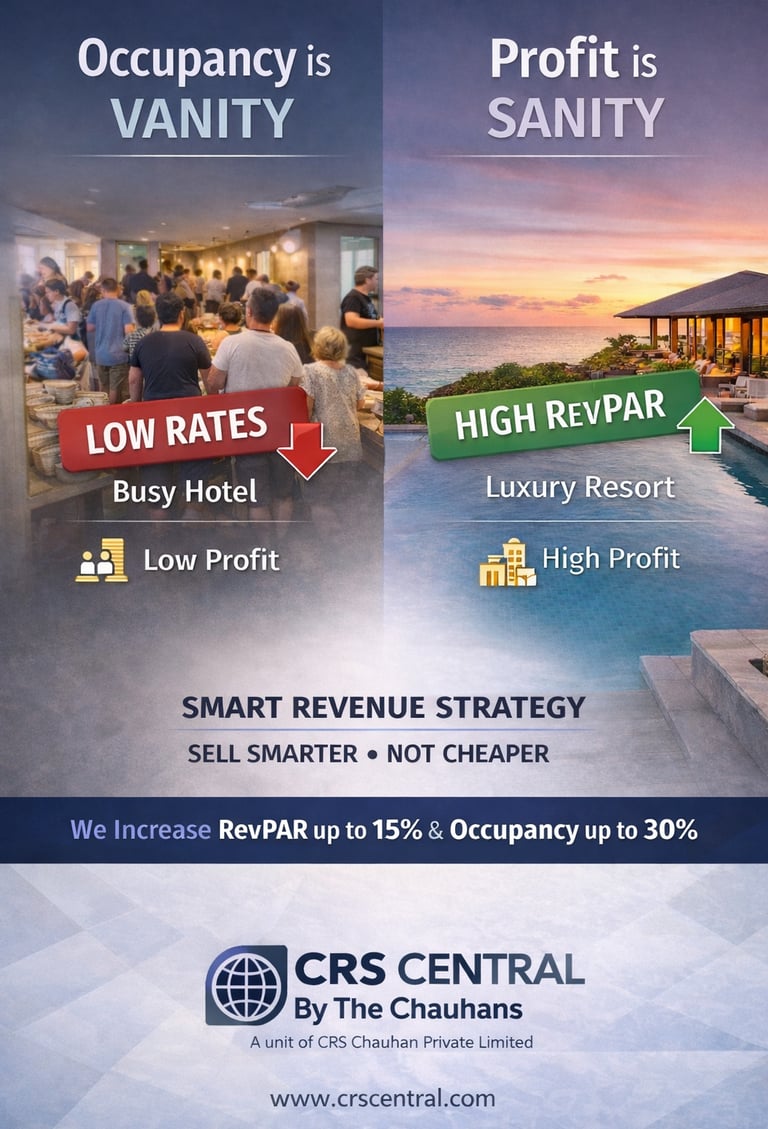
In the hotel industry, one number often gets the most attention: Occupancy
Daily reports highlight it.
Teams celebrate it.
Owners ask about it first.
But here’s the uncomfortable truth:
👉 High occupancy does not always mean high profit
In fact, many hotels run at 70–80% occupancy and still underperform financially.
The Occupancy Trap
At first glance, it seems logical:
Lower price → More bookings → Higher occupancy
But in reality:
Lower rates reduce overall revenue
High occupancy increases operational costs
Profit margins shrink
👉 You may be busy — but not profitable.
Profit is the Real Goal
What truly matters is not how many rooms you sell…
👉 It’s how much revenue you generate from each room
This is where metrics like:
ADR (Average Daily Rate)
RevPAR (Revenue Per Available Room)
become more important than occupancy alone.
Where Hotels Lose Money Without Realizing It
Most revenue loss doesn’t happen in obvious ways. It happens quietly, through daily decisions.
Here are the Top 7 Revenue Leaks:
1. Over-Discounting Rooms
Reducing prices too quickly or too often.
👉 Many bookings would have come anyway — at a higher rate.
2. Poor Channel Mix
Heavy dependence on OTAs like Booking.com, Agoda, and Expedia.
👉 High commissions eat into profits.
3. Rate Disparity
Different prices across platforms.
👉 Guests lose trust and book on OTAs instead of your website.
4. Selling Too Cheap Too Early
Rooms sell out fast — but at low rates.
👉 You miss the chance to earn more during high demand.
5. Weak Demand Forecasting
No clear understanding of booking pace and demand trends.
👉 Pricing decisions become reactive instead of strategic.
6. Lack of Inventory Control
All rooms are made available at all times.
👉 No strategy for maximizing high-value bookings.
7. Competitor-Led Pricing
Copying competitor rates without understanding demand.
👉 You follow their mistakes — not the market reality.
The Real Impact
Individually, these may seem small.
But together, they lead to:
❌ Lower RevPAR
❌ Higher OTA costs
❌ Reduced profitability
❌ Weak pricing power
👉 This is called Revenue Leakage
From Occupancy Focus to Revenue Strategy
Hotels that perform better make one key shift:
👉 From filling rooms → maximizing revenue
This requires:
✔️ Dynamic pricing based on demand
✔️ Booking pace analysis
✔️ Channel optimization
✔️ Rate parity control
✔️ Inventory management
How This Improves RevPAR
When pricing is aligned with demand:
Rooms are not sold too cheaply
High-demand periods are maximized
Direct bookings increase
Profit margins improve
👉 Result: Higher RevPAR with controlled occupancy
How CRS Central Helps
At CRS Central, we focus on one thing:
👉 Maximizing revenue — not just occupancy
We work as your extended revenue team, helping you:
✔️ Identify revenue leakage
✔️ Fix pricing gaps
✔️ Optimize channel mix
✔️ Reduce unnecessary discounting
✔️ Improve demand forecasting
Our Impact
👉 We help hotels:
Increase RevPAR by up to 15%
Improve occupancy by up to 30%
Reduce OTA dependency
Build long-term profitability
CRS Central: We don’t rely on guesswork.
We use:
Real demand data
Booking pace trends
Market insights
Structured pricing strategies
👉 To help you sell smarter, not cheaper
Occupancy looks good on reports. But profit builds your business.
👉 Don’t chase full rooms.
👉 Build a smarter revenue strategy.
Let’s Identify Your Revenue Gaps
At CRS Central, we help hotels uncover hidden losses and unlock their true revenue potential.
📩 Get a Revenue Audit Done
🌐 https://crscentral.com
Contact
Get in touch with us
Phone
info@crscentral.com
+66 (0) 990 143 142
© 2025. All rights reserved.
CRS Central is a brand owned and operated by CRS Chauhan Private Limited.